God In A Carrot


In the bordertown where I grew up, I knew a banker.  One day he looked down from his office window at a gnarly-looking tree on the sidewalk below.  From that angle the tree bark looked to him like the image of the Mother Mary, which he relayed to his coworker.  Within hours, a shrine was erected around the tree complete with candles and flowers, and the tree had a spot on the local evening news. 

It was not uncommon to find our Lord’s mother around town in the most ordinary of places.  At least once she was found in a tortilla.  And whenever her image appeared, it was a big deal.  The spot was marked; the moment elevated to the sacred.  To me, it was quirky and charming, just one more way my hometown was special.  I might have even giggled about it.  

What I didn’t know back then, is that I would grow up to see God in a carrot.    

A few years ago while in New York, I ate at Eleven Madison Park.  I didn’t know what the restaurant was at the time, or where it was headed on the world stage.  I just sat down to enjoy dinner.  (Sometimes the best way to experience something is with open hands and an open mind, and zero expectation.)  

Plate after plate came from the kitchen with the seemingly simplest of ingredients.  But whatever ordinary thing it was— be it sturgeon, or pumpkin, or quail egg, or celery— it was the best thing I had ever eaten, the purest and most perfect expression of itself that it could be.  I was fully ecstatic by the time my waiter placed a carrot before me that changed my life.  

Tasting that carrot, I felt as though I realized the carrot’s true destiny: a gift of love from the Creator to me.  He designed it, grew it in the soil, bathed it in sunshine and dew, plucked it up at the right time, and put it in the hands of a genius chef to perfectly prepare and plate so that I could have this moment of joy and satisfaction and thanksgiving.  With this carrot God told me He loved me, and with each bite, I said it back.  

Enjoying that carrot was, for me, an act of worship.  It was irrelevant whether the chef or the owner knew God, too, or intended such a thing, or whether any other guest had the same experience.  God served me dinner that night all the same.    

Of course, I can’t entirely trust my carrot experience.  To begin with, memories are untrustworthy.  And then there’s the fact that I always get a little euphoric about a nice meal, and with that one in particular I definitely also had wine.  And the more that time goes by, the more I can convince myself that it was just food.  How good can a carrot be?  

But there is evidence in Romans 1:20.  Paul writes, “For since the creation of the world His invisible attributes, His eternal power and divine nature, have been clearly seen, being understood through what has been made…”  

In The Screwtape Letters by C. S. Lewis, a master demon corresponds with a novice demon on the tricks of winning away the soul of his assigned human.  After the human is lost to God during his morning walk and evening book, the master demon writes to the newbie: “You should have allowed him to walk purely for physical exercise and read his book just so he could quote it to others.  In letting him enjoy pure pleasure, you put him within the reach of God.” 

When Camden was a baby, I would slide into the back row at the start of church, tired and distracted.  When the music began I would close my eyes and picture my dog running toward me.  The vision of her flopping ears and goofy smile helped me to tune my heart to His.  To focus.  For an entire season of my life, that was my fastest route to God’s presence, the way I assumed an attitude of worship.  After the carrot dish, this started to make more sense.   

The more I enjoy of this world, the more convinced I am that each experience is worship— an assignment of glory— and when we delight in them we choose, consciously or otherwise, where the glory goes.  It can be to the thing itself, or to ourselves, or to the Creator.    

In Romans chapter 1 Paul goes on to say, “For even though they knew God, they did not honor Him as God or give thanks… and their foolish heart was darkened.”  What if our options are to look like fools about a carrot, or to actually become fools refusing to recognize Him where we find Him?  

Elizabeth Browning wrote: 

Earth’s crammed with heaven, And every common bush afire with God; But only he who sees, takes off his shoes, The rest sit round it and pluck blackberries, And daub their natural faces unaware…”

Or, as Steven Pressfield wrote in The War of Art: “…[dreams are] as common as dirt.  So is the sunrise.  That doesn’t make it any less of a miracle.” 

Maybe I’m growing sappier with age, but I really love life: to be outside, to eat good food, to drink wine with friends, to love my dog.  The sappy Mom I’ve become would LOVE to pull that giggling little girl aside from my childhood and caution her to hold her tongue.  I’d warn her not to mock the stacking of stones or the giving of thanks.  It was never about the tree or the tortilla, I would tell her.  It was always about the tender heart who saw Him there.  Better to look like a fool for love, I would say, than to become one.

Hope in the Dark Night


IMG_4117.JPG

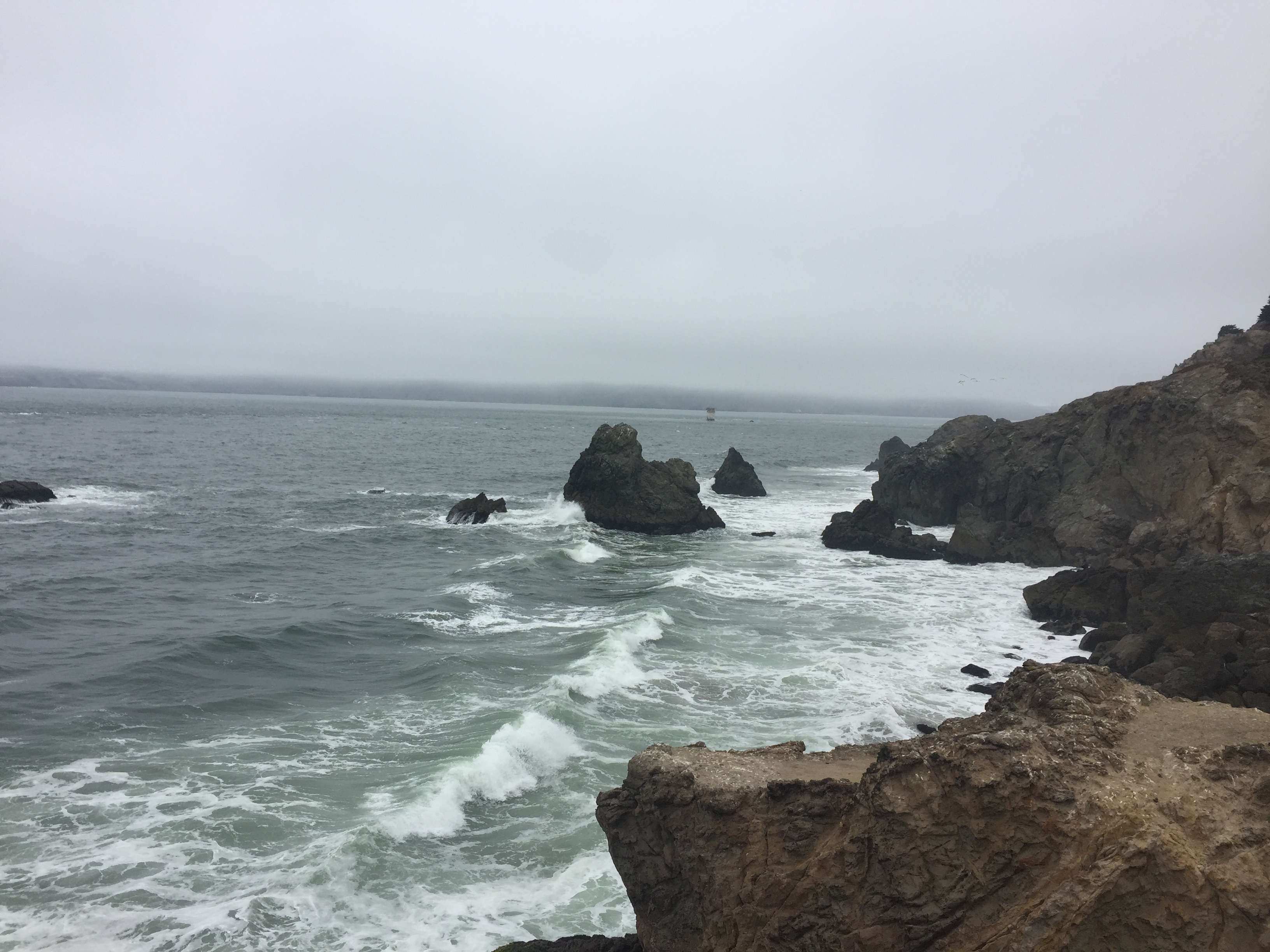
Over three hundred shipwrecks lay on the ocean floor at the entrance to San Francisco Bay.  The spot is known as Land’s End, and a hiking trail by the same name runs along the shore overlooking this particularly hazardous stretch of water.  This is one of my favorite hikes, and we took our kids last week while on the long road home from Seattle.  The trail is dreamy for a Texan like me: cold, salty winds, and majestic vistas of wild cliffs and raging seas, with the Golden Gate Bridge rising up through the fog in the distance.  But for the ship captain, that waterway is a dangerous gauntlet of tides, rocks, and fog that brought many a vessel to its grave. 

Recently I learned that a childhood friend of mine had, now in adulthood, lost his faith in God.  When his job asked him to look closely at child abuse for a time, he concluded that if such an evil exists, then God couldn’t also.       

Many of my earliest childhood memories involve his family.  Their house was the house I went to after school if my Mom couldn’t get me.  Our families were close.  I remember vividly his mother’s laugh, and her African stew with sticky rice and peanuts.  I remember meeting his father’s eye over my mom’s shoulder as she held me in the pew at church, and him making funny faces at me, like crossing his eyes and sticking his tongue out, until I giggled and his face dissolved into a warm and playful smile.  (Their Dad had the best smile.)  Once I went home from school sick to their house, and ended up throwing up all over their living room carpet.  It was embarrassing and I felt terribly, but their Mom wrapped me up in a huge hug and told me it was all okay.   

His was a family of strong believers.  We knew them from church, and his parents were, like mine, committed to the Lord.  He and his brothers were raised, as we were, with God everywhere: three times a week at church, in conversation, in friendship, in life lessons and spankings, in the giving of thanks at meals and every other time, and in the answer to every real question asked.

This news of him, some thirty years later, made me sad.  It grieved my heart.  I wished we were still close.  Close enough that I had been there at his crossroads.  The moment he held child abuse in one hand, and God in the other, and then laid one down.  I would have told him this:

I stood here, too.  For some it’s a divorce or a sick child.  For me, it was child abuse, too, just like you.  

That place is hard.  And no matter who else has stood there or when, you are there alone.  The moment is lonely.  Your parents don’t factor in.  What others believe for you doesn’t matter.  It is as if you are in a dark forest surrounded on all sides by looming darkness.  It is one of the frightful scenes out of Alice In Wonderland, or The Wizard of Oz, or Harry Potter.  And you look down at your faith, so little in your hand.  Here and there it catches light from an unknown source like a tiny glittering object, like the resurrection stone or a pair of red sequined shoes.  And you make a choice. 

In the season I made mine, I read a quote that profoundly impacted my life.  It is by Oswald Chambers, and it says: “Unless we can look the darkest, blackest fact full in the face without damaging God’s character, we do not yet know Him.”  

And that’s the thing.  I know Him.  He’s the One who showed up, time and time again, for two child abuse prosecutors who prayed against all odds (and the evidence at hand) for justice, and heard “We, the jury, find the defendant guilty.”  He’s the One who showed up to meetings with abused children when I looked in their faces and said, “I believe you.  You are brave, and you are strong,” and watched their eyes fill with tears.  He’s the One who shows up in the aftermath of evil and helps the underdog and the weakened rebuild with courage and hope.  He’s the One who raises the phoenix from the ashes, the dead from the grave, and the sinner to a second, and third, and infinite chance.  He’s the Hope Against Hope, the Watcher on the Wall, the Holder of the Gate, the Last One Out.  He’s the One who jumps on the grenade, and inspires us to do the same.  He’s the world’s fool, and Heaven’s delight.  Because of Him, grass finds its way up through concrete, spring follows winter, and morning follows night.

Yes, there is night, yes there is evil, yes there is darkness.  But there is also light.  A light catching here and there, dancing and playing over the faith in your hand, calling out your name in a whisper, reminding you that there is goodness and love all around you. 

I learned last week in San Francisco that there are “harbor pilots” whose job is to guide ships through dangerous waters.  They possess unique expertise and detailed knowledge of the local waterway.  They ferry out to an approaching ship and climb aboard for the sole purpose of guiding the ship through the channel safely.  Their role is crucial.  They’ve been there before.  They know where the rocks hide.  They know what is below the surface of the waters.    

Not all of the ships with a harbor pilot make it through.  Having one isn’t a guarantee.  But still, if I were a ship captain approaching Land’s End, I’d want one to climb aboard.  If for nothing else, it would be nice in those final moments to simply not be alone in the dark night.  


Sheepless In Seattle (A Hunting Story)


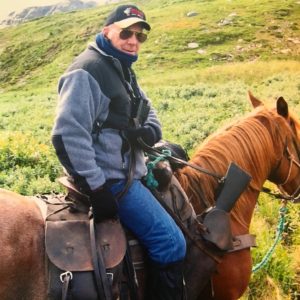
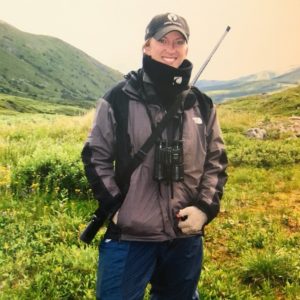
Below is an article I wrote in 2006 for a hunters’ publication.  It tells the story of a sheep hunt I went on as my Dad’s sidekick.  The end of that trip was my first time to Seattle.  Now that I am summering here with my kids, I can’t help but remember it.  Since then, I’ve married and had children, and I’m no longer accompanying Dad on his hunting excursions.  I’m grateful to have had occasion to write it down; it’s so fun to look back on.  
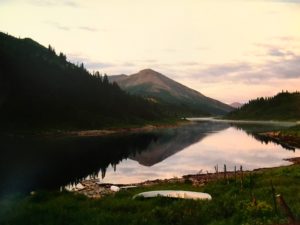
            

“This is my third go at Stone sheep out at Scoop Lake,” one man said to the other across the aisle of our Air Canadian flight to Whitehorse, Yukon.  Eavesdropping, my father and I gave each other a momentary look of unease, a look we’d grow increasingly familiar with over the next two weeks.  I could see the words ‘third go’ mixed with certain expletives written in my father’s face.  

The Stone sheep season began in only a few days’ time, and residents and nonresidents alike would scatter across the Canadian wild for a chance at its game.  We, along with most our flight, were on our way to such a sheep hunt.  I was not so sure, however, that we, as most our flight, qualified as “sheep hunters.”  It is true that my father and I are both hunters, and have been all our lives.  I am told that at the age of four when the scent of warm, freshly slain Whitetail poured out of the deer’s open body I exclaimed, “Ah! The smells of Christmas!”  Most definitely, we are hunters.  It is also true that my father took his Dall sheep on a rigorous Alaskan hunt in 1991.  But looking around the plane, I decided much to my alarm that despite these truths, we were not sheep hunters.  

“Sheep hunters” wore flannel over hard, muscular physiques.  Their thick ankles grew boots that seemed chiseled from tree bark and expertly weathered by hell.  Their dense facial hair fell within the shade of greasy baseball caps affixed with logos of farm equipment or gun manufacturers.  They closely resembled the hardworking, rough-riding characters I had seen only on Marlboro billboards and my Brawny paper towel packaging.  Dad and I, at ages sixty and twenty-five respectively, did not seem to fit neatly into this crowd.  

My father had booked our ten-day Stone sheep hunt through Scoop Lake Outfitters.  He planned to pull the trigger while I, official gun bearer, would ensure that he and his rifle were at the top of the mountain with a shot to do so.  The plan was to hunt a piece of Scoop Lake’s 4,000 square mile expanse of Northern Rockies in British Columbia.  Scoop Lake’s reputation for Stone sheep was the topic by rote at safari clubs and hunting expos throughout the world.  A North American legend, its reputation had even survived more recent rumors and publications that its sheep were tapped out and its numbers dwindling.  Dazzled by the prospect of such adventure, Dad and I had basked in the misery-to-come in the way we always anticipated these big trips—intense euphoric expectation that would not fully be replaced by fear until Mom dropped us off at the airport.  When we found ourselves one flight and two airports removed from Mom, that fear had mounted to a breath-catching, copper-tasting secretion in my throat.  

At one of two baggage carousels at the Whitehorse airport the passengers gathered, anxiously shifting weight from one foot to the other like nervous game at a watering hole.  But as gun case after silver gun case spewed from the chute’s belly and bumped noisily along the carousel track, tensions eased and introductory conversations began.  Outfitters’ names were dropped, rifle calibers exchanged, and trophy expectations aired.  It was at this point that Dad and I met Tom and his adult son, each of whom (like my father) booked Stone sheep hunts with Scoop Lake.  Tom was good looking, charismatic, and my father’s age, but any friendship that might have blossomed between them died stillborn the minute Tom declared there was no mountain height he could not climb to reach his sheep.  Tom gave the weight of this statement little time to digest before he produced the photo album evidencing his last Stone sheep— an impressive 42” trophy— that Tom returned this year to trump.  Enduring Tom’s confidence in the face of my own fear felt a bit like eating a plate of cold, day-old eggs.  Every minute we waited for that taxi sent us deeper into Tom’s musings on his sheep hunt, which were mostly of how he created the mountain-climbing, horseback-riding stealth machine that stood before us.  He and his son spent a great deal of time training and researching this very expedition, and already knew which campsite, which guide, and even which mountains they paid to hunt.  Staffed with much less information, Dad and I exchanged our second look of the day, and the fear became a frantic, kinetic tribal dance of grotesque pygmies in my gut.  

The journey from Whitehorse to Scoop Lake is no small feat.  Our arrangements, shared by the other Scoop Lake hunters, included an overnight in Whitehorse, a four-hour car ride to Watson Lake, a floatplane ride from Watson Lake to Scoop Lake headquarters, and lastly a floatplane ride from Scoop Lake to one’s assigned hunting camp.  Despite these hurdles, Scoop Lake’s impressive reputation for Stone sheep rose as the seductive sirens’ song; it held the hunters in eager anticipation of the adventures that lay ahead, time and expense be damned.  And, if reputation alone did not suffice, Scoop Lake’s rich history offered any historian a warm embrace to counter the strains of arrival.  My father was one such hunter. 

When Frank Cooke bought the land west of Kechika River from Skook Davidson for $5,000 in the early 1960s, he scored a reputable and untapped natural resource.  With a mind to guide the area, he recalled in interviews that the land overflowed in sheep, moose, caribou, and goat.  Above a basin between the Turnagain and Colt Lake, Cooke recalled counting as many as sixty-seven rams in one herd, a figure he attributed to the land’s successful wolf-control programs and lack of hunting.  Undoubtedly, my father (thanks to the knowledge derived of books such as these) counted out sixty-seven rams instead of simple sheep each night when head met pillow and eyes closed tightly to dream.

My entire life, Dad has graced each trip with its own reading list, tailored specifically to regions and activities so that wherever we were—diving the Great Barrier or on African safari— we might experience it while reading of deep sea shark attacks or lions who hunt in darkness.  In our family, a trip is truly great only on the other side of perfectly paired book selections to complement the travel.  For this sheep hunt, despite the fact that our floatplanes grimaced at take-off with every pound of weight, Dad’s library lacked nothing.  Brought to fan the flames of fantasy and adventure on our trip, it included accounts of the Klondike, biographies of Frank Cooke, poems by Robert Service, stories by Jack London, Pat McManus’ humor, and countless mountain climbing tales, mostly of Everest.  I dare say that despite the days spent in tiring travel, we arrived at Colt Lake (our assigned hunting camp) as though shot from the slingshot of boyish hope and expectation.  Then we looked around. 

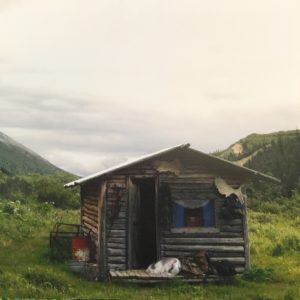
I had scarcely noticed where it was they left us for all the distraction of plane noise, struggles with luggage, and the fierce handshakes of our hunting guide and horse wrangler.  But as the sounds of our Beaver faded around the mountain I became acutely aware that with it went the world and before me lay a dispiriting sight: 350 degrees or more of desolate mountain, valley, and lake, and then a sliver of habitation—a wooden plank leading to a 15-foot shack, a horse corral, a shed, and an outhouse.  Before me lay the famous and historic Colt Lake camp.  

The shack housed our kitchen and sleeping quarters.  Once inside I was told to pick a bunk, and then if hungry, to make a plate.  The back of the cabin partitioned from the kitchen and dining area held four bunks, two up and two below.  Each bunk owned its own mattress of yellow foam turned brown with age and splotched with mysterious and not so mysterious stains.  A standing shower in one corner was immediately promising, but I discovered its floor was used for storage and its shower bag was shriveled from disuse.  Half naked women mocked me from the cardboard walls on which they were tacked.  I arranged my sleeping bag so as to touch the foam as minimally as possible, particularly the precarious three-inch wooden border where dirt and human discard reminded me just how historic Colt Lake truly was.  At this, I decided to inventory lunch. 

Two steps later I had joined them at our buffet, which I studied with a feigned air of satisfaction.  A loaf of mystery meat, recently sliced, sat with its congealed outer layer of brackish jelly that still bore the imprint of the can that birthed it.  There was a sandwich spread of mayonnaise dotted with green and red flecks, white bread, and Tang to wash it down.  Over lunch our hunting guide and wrangler discussed the persistent mice problem.  I lost a few words over the white noise of the hand-held trucker’s radio connecting us to others, but I caught more of the conversation than I would have liked.  In my sleeping bag that night with the radio’s ccrr ccccrrrr to set the mood, I conversed with my nerves on waking early, riding horseback and climbing mountains.  

The next afternoon, our horse wrangler sat clutching a broken arm waiting for his medical evacuation by floatplane.  This injury, sustained at the wild temperament of his horse, catapulted the conversations with myself to screaming fits inside my head.  In all my naivety, I pictured the horse wrangler to be the horse whisperer—the one who would guide the reigns of my steed as we negotiated difficult terrain.  As I watched him disappear around the mountain only one day after my arrival, my heart sank.  A calm, simple, ageless hunting guide by the name of Bob bore complete responsibility for us now.  

Bob played by the book.  Unfortunately, the book demanded that we, as guided hunters, abide by stricter standards than resident hunters.  Our ram must not only be a legal sheep by way of trophy size, but it must be aged at eight years.  Aging Stone sheep requires close enough proximity to count the rings on the horns.  This closeness proved to be as elusive as the Bongo, and as mysterious.  

I came to learn that the sheep hunt is a game of patience unlike rattling Whitetail or hunting from blinds.  It sucks the very marrow from the hunter’s bones.  To sheep hunt means to rise early, mount up, and ascend mountains on horseback in cold rain.  This might take an hour or three before you dismount and continue climbing on foot.  Several hundred feet in elevation later, the hunter sits and “glasses,” which means to scan the mountainsides using binocular and spotting scope.  It is difficult for the untrained eye to find anything in the crags and rocks.  After hours, and now soaked through to skin, the guide may find Stone sheep.  At this, the hunter’s heart flutters and subsides as he endures perhaps another hour in the evaluation of the Stone sheep, most likely spotted on a mountain ledge a thousand yards away.  The curl of the horn is determined ‘legal’ or ‘not legal’.  It is at this juncture that the guide and hunter discuss the best way to get closer to the sheep.  The hunter’s heart begins to sink as he realizes the futility of any such attempt.  

Stone sheep position themselves with maximum visibility to detect a predators’ approach from great distance, complete with escape routes up and over mountains and the wind in their favor.  The best and most promising route always requires a great deal of the hunter’s physical aptitude as well as time.  Should the hunter have the ability and even the heart to trek his way onward, he often finds he does not have the time, as the entire process has pushed him right up against dusk.  And as the hunter mounts his horse and begins the procession home, he cannot take solace in the thought of returning first thing in the morning, because it is rare for Stone sheep to hold patterns or to stay where yesterday found them.  And so the hunter returns to his shack to dry his clothes and hope tomorrow is better than the day before.  

On our third day, we finally spotted a legal ram, but we waited the afternoon in ambush and nothing came of it.  On two other occasions, we found sheep that were impossible to reach or not large enough to hunt.  We took several excursions, all of which felt like blind stabs into sheep country.  On one occasion we had a shot at a full curl sheep, but from a distance that did not allow us to age it.  Our hunting guide was the type of hunter who loved hunting for its communion with the outdoors and not for the blood lust that drove him to hunger for the kill.  This greatly enabled his patience, but ultimately made him indifferent to the progress of each day: namely, whether or not we killed a sheep.  

Most hunters feed on the misery of the hunt.  We prize our trophies not for trophy’s sake alone, but for the agony endured to win it.  The price one pays to pull the trigger is part of the allure.  Each species taken represents a victory over weather, timing, fatigue, expense and self-pity.  And yet, to transcend the misery the hunter needs the heart-pounding lust for blood that rises at the closeness of the hunted – at the prospect of the kill.  It was this hope that could not survive at Scoop Lake. 

Our circumstance was unique.  We were not trained or experienced sheep hunters.  Our hunting guide lacked intensity, as well as knowledge of our particular hunting camp and its surrounding land.  And yet, all these variables do not excuse how few sheep – only one legal sheep – we saw while on this trip.  When reunited with Tom and his son, we learned they too felt disappointed at the surprising absence of game and were frustrated at the process.  The books that spoke of sixty-seven rams now read as a history of a land no longer meeting the quota its reputation created.  Frustration had replaced our fear, and the misery that met us did not tuck us in cozily at night with warm thoughts of home, but rather drove us mad. 

As Dad and I sat afterward over coffee in Seattle, I knew that as with all miserable trips, I would revere the misery over time.  Weeks would separate me from the reality of the cold rain and the moldy sandwiches.  I would remember the smell of my horse, the warmth of a hot chocolate mug in my hand, the sweet taste of mountain lake water and the sound of the storms on our tin roof.  I would always adore the time with Dad—laughter turning to tears in the suffering of it.  And as always, I will sign up for the next adventure.  But in the hunt there is always the hunger, and no hunter should endure misery only to remain sheepless in Seattle.  
 

SaveSave
A Search for Sea Glass


I am on the beach at Whidbey Island looking for sea glass.  This is my favorite place, and my favorite pasttime.  I walk along the water’s edge with my three children: Camden way ahead, Ellie right beside me, and Mitchell in a pack on my back.  My phone plays worship music.  Ellie and I hold hands, and I sing to the Lord.  A new song starts and grabs my heart, so I stop and face the ocean, close my eyes momentarily and sing to Him: OH LORD, YOU’RE BEAUTIFUL.  

And He is.  It is July in the Pacific Northwest, and the salty ocean breeze is crisp and almost cold.  The water is too cold for me, but the children don’t seem to notice.  In the distance beyond the water, somewhere out in the Sound, mountains rise up out of the ocean like brushstrokes in shades of blue.  YOUR FAITHFULNESS REACHES TO THE MOUNTAINS.  

The water is out with the tide, and the sand at our feet is a treasure chest of marine life.  Ellie holds up a crab claw for my inspection.  She then drops the claw and picks up an empty oyster shell.  YOUR JUSTICE FLOWS LIKE THE OCEAN’S TIDES.   

Behind me is a forest of tall, evergreen trees.  Where the cove wraps around, the trees continue and become smaller, jagged lines against the sky.  A Great Blue Heron swoops down and glides silently over the water.  THE TREES OF THE FIELD CLAP THEIR HANDS.  

I am now crying, because I almost always cry when I worship.  Ellie realizes this and wraps her arms around my leg in a huge hug.  She then tries to wave Cam over and shout-whispers: “Mom is worshipping again!” 

Yes, Mom is worshipping again. 

I turned 37 yesterday.  I am mindful of where I have been, where I am today, and where I will go.   That I am halfway through or so, but still have so many things to learn, books to read, and places to see.  But also, a new thought in my thirties: the truth that if I didn’t learn those things, or read those books, or see those places, I am content. 

Content, humbled, and grateful.  

I point to sea glass with my toe and Ellie scoops it up and puts it in my hand.  This one is blue, a very rare find here.  Brown and white are most common, then green, then lastly, blue.  Something to do with the colors of glass in Asia where it begins as trash.  I turn it over in my hand.  

Proper sea glass is frosty and smooth, and this one is, too.  It tumbled in the ocean for so many years and lost all its rough edges and glassiness, and it is now a treasure that only time and friction could have  made.  YOUR KINGDOM IS LIKE A PEARL OF GREAT WORTH.  

It all takes time— sea glass, pearls, diamonds— time and resistance.  YOU HAVE COME TO MAKE ALL THINGS NEW IN THEIR TIME.  Even litter.  Even a grain of sand stuck in an oyster shell.  Even me.

These days I don’t feel young.  My face is aging faster than I’d like, and my three kids have changed my body.  (During my last c-section the doctor kept saying, “sorry it’s taking so long, there’s just so much scar tissue.”  Which is an odd thing to hear when you’re on the table.)

But I don’t feel old either.  My body is stronger than I ever knew.  It carries my children on my back and in my arms, and in the lines of my face.  It goes all day, and then some more.  I feel able.  I know I am in the middle of it.  

These snapshots I take today of tiny feet in the sand are the ones I’ll look back at and think “those were the days…” (Hopefully not followed by, “…before we messed it up,” or, “…before so-and-so fell off the wagon.”)  

Inside the cabin at the end of our beach walk is a cross-stitched pillow.  I’m not really one to have a cross-stitched pillow speak to me, but this one says: “Use it up, Wear it out, Make it do, Or do without.” 

Yes.  That is good.  That sums up my thirties.  And motherhood.  And the quiet confidence that has come in this season.  I am being used up, worn out, made to do, made to grow, made to repent, and at times, made to do without.  So much of my twenties was spent trying to turn heads.  In my thirties I’ve said my goodbye to all that, and now am just trying to turn my kids’ heads.  And there is so much peace in that transition.  

I am certain that others in their thirties would disagree.  They are at the height of their striving: for more money, or a bigger house, or a better spouse, or a new thrill, or still at trying to turn heads.  Or they are super mindful of places they could be that they aren’t.  Or they’re striving against fear about their kids, or their own mortality, or aging.  

But I feel content.  I am at peace with all people; I feel love for mankind and this world.  I feel so blessed— blessed beyond dream or hope or expectation, pressed down and shaken together.  I feel loved by a God so much bigger and deeper and stronger than I am.  I feel content with what I have and what I don’t.  I would love to live more days, but if I didn’t, I trust Him to watch over all I’d leave behind.  I feel every day used and tired, but in the most satisfying way.  I feel poured into and poured out.  I feel less preoccupied with the appearance of my vessel and more interested in what’s inside.  I feel sinful and humbled, and like I have so far to go, but I also feel as though there’s no rush in getting there.  I feel as if I’m tumbling in an ocean, wearing down and wearing out, in the best possible way.  

Which brings me back to the sea glass.  I find another piece and Ellie acts as my arms to scoop it up for me.  This one is green.  I walk a little farther and find a white, and then a brown.  And this is my favorite thing to do.  It is relaxing to walk along the shore and look for that little glimmer, a glint in the light, that calls to me: Here I am.  I am not wet seaweed, I am not shell.  I am what you are looking for.  And when I spot one, my heart lights up, and my eyes squint (there are those pesky wrinkles again) as they narrow on my treasure, and I feel joy when it is in my hand.  I delight in it.  

And that’s Him, too, isn’t it?

I pray that He delights in finding me, and you, along His walks.  You know He takes them as He did in the garden.  He walks in the cool of the day, looking out for one that is His, worn down by an ocean of resistance into the perfect treasure to stand out among the grains of sand and among the seaweed, to bring Him joy in His hand.  

SaveSave

SaveSave

SaveSave

I Know a Superhero


https://money.usnews.com/careers/applying-for-a-job/articles/2018-06-26/pursuing-justice-how-to-get-a-job-helping-kids

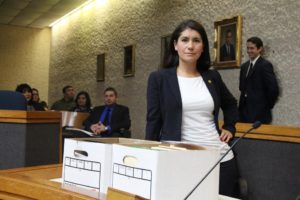
This photo and link are from a U.S. News and World Report article featuring my dear friend, Brandy Bailey.  She is a real life superhero. God knit my heart to hers ten years ago at the District Attorney’s Office in Brownsville, Texas, the day she asked me to be her partner prosecuting a child sexual abuse case.  I said yes, and God joined in and blessed it.

We tried child abuse cases together for several years, through the first two of my three pregnancies.  I remember feeling both spiritually satisfied, and emotionally drained.  I remember days I cried my eyes out in my car after work.  I remember bringing the facts of the cases home with me at night, unable to shake them.  I remember praying for many months that God would take that cup from me, and find another way to use me– one that didn’t require so much.  I loved my work, but I wanted to be home with my kids.

My third child, Mitchell, is the only one born outside of Brownsville.  The only one that while in utero didn’t try a murder case with me.  The only one to know a mother who is home all day, every day.  Some days this feels like a win, and some days it feels like a loss.

Often I remember my prayer for a different cup.  I know that God would have continued to use me there, on the front lines, had I asked.  Some days I wish I was as strong as Bailey, to pray only for what God wants of me and not insert myself into the prayer.  But then I remember that He knows my heart before I tell Him, and He knows my limits.

My decision to stay home felt easy at the time.  I would make the same decision again.  There are days I really miss the courtroom; days I really miss Bailey.  There are days I miss putting on high heels and leaving my house.  There are days I miss showing up at day care to pick up kids I actually missed.  All in one weepy jumble I both miss the abused children and hope to never meet another one.  I always miss feeling like I was at the center of God’s heart, fighting on a front line next to my friend.

I enjoyed my job.  I miss my job.  I don’t know if I’ll ever go back to it.  I probably won’t.  My portion right now are the three children under my roof.   These truths feel better on some days than others.

A strange thing I learned as an adult is that all the people who are running the world are just people making choices.  Just like the people in the Bible.  You don’t achieve magical wisdom in your thirties, and adulthood doesn’t deliver you to the wizard behind the curtain.  Superheroes are born as ordinary people, sometimes quite flawed, not knowing they will be superheroes.  But somewhere along the way, their choices make them heroes.  They say Yes when it is asked of them.  They make sacrifices when others make excuses.

Brandy Bailey has always inspired me.  It isn’t that she has raw intelligence, hidden talents, or a wellspring of courage when others feel afraid.  In fact, we often felt afraid together.  It is that in the face of fear, time and time again she chooses to go in.  She chooses what God wants for her life over what she wants for her life.  She chooses to lay it down and watch it burn.  To do what is right.

I believe God ordained me to be the Jonathan to her David.  I am her encourager and her friend.  I show up every now and then to say, “You’ve got this! You are right where God wants you!”  And like their relationship, ours is sometimes too deep for words.  We have more than once wept on each others’ shoulders.  We won’t ever be able to explain to other people what those days were like.  The cases and kids and late nights and bathroom breaks and hallway sobs and last-minute prayers that bound us.  Much like soldiers who go to war together, there are some things only we will ever know.

I know, I know, it was just the practice of law.  And what I’m doing now is just motherhood.  True, true.  But also, this is it— these hours and these days and these choices.  This is a story He is writing on our hearts and in our lives and in our relationships.  I am so deeply humbled and honored that at one time, my story came alongside that of Brandy Bailey.  I am better for having known her, and called her friend.  Her everyday choices– the small and private and hard ones– turned her into a superhero.  I want to be a witness, not just in this life but in heaven, too.  I hope He lets me stand close by when He welcomes her home.  I’d love to see that.

SaveSave

SaveSave

SaveSave

SaveSave

SaveSave

Oh Captain, My Captain (A Father’s Day Tribute)


My favorite place to be is under my covers. I nap every day I can. It’s a favorite pasttime. Often as I drift off I think of the proverb: “A little sleep, a little slumber, a little folding of the hands to rest, and poverty will come on you like a thief.” But then, I fall asleep. I’m okay with that.

Being under my covers reminds me of being a child in my parents’ house. I feel safe. I feel hidden. I feel at peace. As my family says, I feel “cozy in my bozy.” What is a bozy? I’ll never know. But there’s no better feeling than to have a cozy one.

Being with a strong, good man feels the same way. As a little girl with my father, I felt safe, hidden, and at peace. When I grew up, one day he asked me: “what do you look for in a spouse?” I answered, “to feel safe.” On this first and most important requirement, many a boyfriend failed. Some were too violent, some were too inconsistent or unpredictable, some were too foolish. Some were compromised by giving me my way too much. These things kept me from feeling safe.

My favorite love story of all time is the one in the book of Ruth. In it, a strong, salt-of-the-earth and destitute widow works and serves her way into the field of a rich, powerful, older and less attractive city leader. He falls in love with her character, and she falls in love with his. One night she puts on perfume (this is getting good!) and goes to where he’s lying down and says, “Spread your covering over me, since you are my kinsman-redeemer.” (And here is where I cry, every time, like the women do in Sleepless In Seattle watching An Affair To Remember). Here she is asking for him to extend his provision to her: to take her under his wing and under his roof and under his covers. It’s beautiful.

I think the reason I love my covers so much is because that was God’s design. The feeling of being covered is one He wants us to relish. It draws us to Him, our Kinsman-Redeemer. He set up that incredibly sexy, “cozy in my bozy” metaphor as a way to show us what it is to be desired by a redeemer, to be under His banner of love, to be safe. This is the role of the husband, and this is the role of the father.

I have been fortunate in my life. As a woman who specialized in child abuse prosecution back in her career days, I know how twisted the role of father and husband can be, how selfish and perverse the world can make it. But my father, Norton Anderson Colvin, Jr., was a good, good father to me. And my husband, Derek Taylor Rollins, is a good, good husband to me and father to our children. And both point me and my children toward a richer and deeper appreciation of what it means to be under the covering: safe, hidden, and at peace.

The job is hard. The world says that for a woman to be under the covering of a man is an antiquated and sexist notion. That man and woman, even when joined in marriage, have the same job to do. I believe that my job is equally important, necessary, and difficult. It requires gentleness, long-suffering, patience, and a thousand other attributes of God that require His Spirit. But I am not the captain of this ship. If we run aground on these waters, God will call out: “Derek, where are you?”. It is an awesome and huge responsibility he carries.

I sleep better at night when Derek’s home. I think: “He’s got this.” Derek lays his head down at night and has to think: “I’ve got this, because God’s got this.” I appreciate all that feminism has done for pioneering women’s rights, I really do. Because of their efforts, I went to law school, and I vote, and I have a voice, and I can write this blog. Praise where praise is due. But I also hold fast to God’s original design: the beautiful love story he wrote into the lives of men and women all over the world. The one where a woman and a man find their destinies when she says to him, “spread your covering over me,” and he says, “I will.”

To all the good husbands and fathers, to all the captains of the ships on whom the mantle of responsibility falls: I salute you. Because of you, we sleep well.

Happy Father’s Day.

Why I Now Blog


My 6-year old, Ellie, finished an intense swim program yesterday. Her instructor claimed success in only eight sessions with a “tough love” method. She pushed students’ heads into the water and towards the steps with little explanation. They were thrown into the water, often kicking and screaming. Putting their faces in simply wasn’t optional.

My oldest child, Camden, didn’t need these classes. When enrolled in regular swim school, she drove herself through every level with relentless determination. But my Ellie, my sweet Ellie, needed something more. She did nine months of regular swim school, “red-carded” every week, never putting her face in. She needed a push.

I, too, need a push. I find it very easy— too easy— to only spectate. I don’t want to become a judgmental critic. I want to be vulnerable, living my messy life alongside yours, remaining humble, honest & engaged.

I need to write. First for me, because failing to write makes my heart sad. It helps me to think, process, and grow. Secondly, for my kids. I’d like them to have a mother who doesn’t stand still, but moves in the direction of her life’s great loves. Maybe one day they will read it and learn about me and about themselves. Lastly, for my community— to offer up my light as a fellow doer.

Ellie swims now. I can’t say that it’s pretty; it’s more powerful than pretty. She explodes through the water. If she wasn’t moving forward, you might think she was drowning. But she is, in fact, swimming. All she needed was a little shove.

So here I go, world. It may not be pretty, but I join my mess with yours. I fear that if I don’t move forward, I just might drown.